 Retyla
RETYLA PRODUCT GUIDE
Repair scratches, creases and tears in an old photograph
Use photo improvement for a scanned or photographed print with scratches, creases, tears or stains. Our algorithm uses the visible surrounding detail to guide reconstruction of damaged areas.
Rescan the print first if glare, severe cropping or scanner marks hide useful information. Include the whole photograph and keep the source copy. Examine the boundary of a repair, then check faces and clothing. A missing eye or mouth leaves less identity information than a scratch across a simple background.
How to start
- Distinguish damage from capture problems
Check whether a mark belongs to the print or comes from glare, a shadow or the scanner. Retake or rescan first when better capture could reveal hidden detail.
- Provide surrounding context
Include the whole photograph when improving scratches, creases or tears. Nearby clothing, background and facial features provide context for reconstructing the damaged area.
- Inspect the repair boundary
Look where the reconstruction meets intact detail, then check the face and clothing. Keep the source and use another original photo to check important facial features when available.
Compare and save
- Check continuity across creases and scratch boundaries.
- Inspect reconstructed eyes, lips and distinctive marks carefully.
- Look for repeated patterns in fabric or background.
What to keep in mind
Missing areas are reconstructed from context, not recovered from an archive. For an important facial feature, another source photograph may be a better reference for checking the result.
Based on the controls and processing flows in the app. Illustrative previews are labelled; no independent benchmark or guaranteed result is implied. How we describe our features
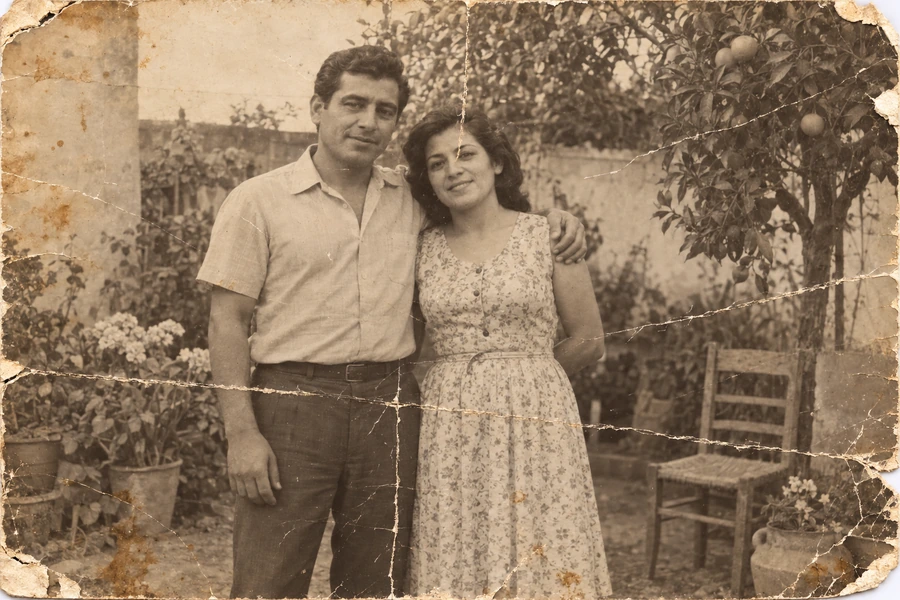
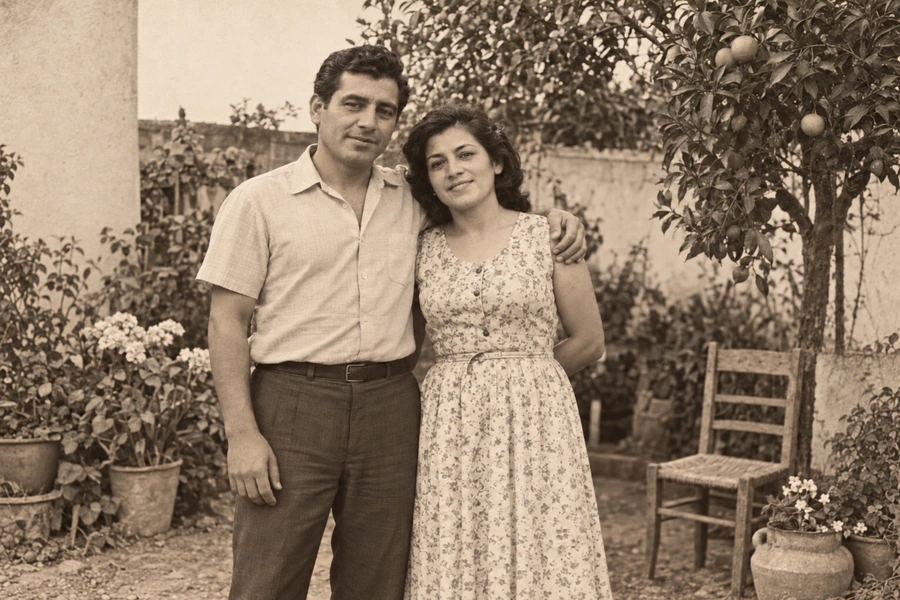
These illustrative examples show a feature. Results depend on the source photo and your settings.
A few things worth knowing.
Can a missing eye be restored exactly?
A missing area is interpreted from context, not recovered from an archive. Less visible facial information makes identity detail more uncertain.
Can I treat the repaired photo as the original?
Keep it labelled as an edited version when accuracy matters. Preserve the untouched source as the record of the photograph's original condition.